


Wheat harvest is now in full swing with yields ranging from 35 to 70 bushels per acre
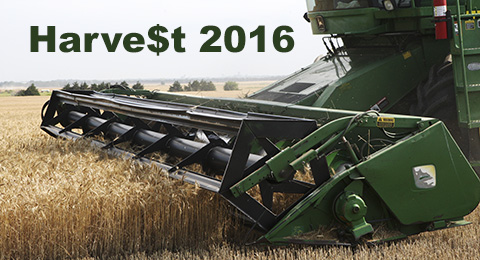

by James Jordan, Sumner Newscow – The wheat harvest is in full swing in most of Sumner County, and it looks good so far.
Test weights above 60 are being reported all around the county, and in Wellington at least, there is a steady stream of trucks unloading wheat. Thursday, 66,000 bushels were unloaded, and 41,000 on Wednesday, according to officials.
In Caldwell the Co-Op is not quiet as busy, but they are starting to see more trucks come in.
So far yields of 35 bushes per acre are common, and some have reported as much as 70. That is a lot better than last year, when flooding and drought took a toll and even 30 bushes per acre was considered good.
The wheat benefited from a fairly cool and wet spring, but there are some fields that are still wet and making the harvest go slower. The crop is coming in a little earlier this year as well.
Earlier in the week Sumner County Extenson Agent Randy Hein said the crop is looking good so far.

The wet and cool weather in the spring helped the wheat fill out. The dry winter was a concern, and has caused some area to be thin, but the rains came in time this year, Hain said. There was some problem with wheat rust last year, but more people sprayed their crops this year, and that has not been much of a problem.
Last year, drought took a toll, but there were also untimely hard rains, heavy wind and even hail that had a detrimental impact on the crop. It was one of the few years that the overall crop was damaged by drought and flooding in the same year. And that was the second consecutive bad year. 2014 was less than half of what 2013 had been, but 2013 was a very good year for wheat in Sumner County and the rest of the state.
There were a few good areas last year, but there were a lot of places that got 10-15 acres per bushel, and some felt that was not even worth cutting.
For the entire state, there was 321 million bushels harvested, compared to 246 million in 2014, which was the lowest in 25 years, according to the Kansas Wheat Association. In 2013 there was 310 million bushels harvested in the state.
In May the Kansas Wheat Association had its annual tour, surveying 655 fields across the state. They are projecting an average of 48 bushes per acre, 14 percent more than last year, across the state.
Here is a report from the Kansas Wheat Commission:Â
Combines continue to roll in south central Kansas as the hot summer sun is just starting to warm up. Farmers continue to share snippets of harvest under wheat harvest with sightings of cut fields and running combines in spread out locations. Many reports indicate that harvest will spread quickly throughout the state after this weekend’s hot, dry weather.
Aaron Schreiner, representative of the Anthony Farmers Coop in Sharon, said that test weights have held a solid 62-63 pounds per bushel with every load that has come across the scales. The Sharon branch received its first load of wheat on Tuesday. While it’s still too early for a protein content and fair yield estimates, Schreiner says, “the wheat looks good.â€
“Just about everything that hasn’t been hailed out looks like an above average crop,†said Schreiner.
Tom Morton who farms near Oxford, Kansas, reports that harvest is in full swing in Sumner County. He started harvesting on Wednesday, and reports that he has some good wheat and some mediocre wheat, but quality and yields look better than expected, with test weights of 60 pounds plus per bushel. Morton attributed that to the cool weather during grain fill.
Harvest has gotten off to a slow start in Argonia, reported Aaron Hemberger, representative of the Danville Coop Association. While he didn’t have any protein content information to share, Hemberger reported that test weights are averaging a little over 60 pounds per bushel. He anticipates that cutting will ramp up in his area this weekend with the warm, dry weather and the arrival of custom harvesters.
“Overall, wheat will be better in our area than last year,†Hemberger said.


