


Kansas wheat harvest is all but complete; prices are abysmal
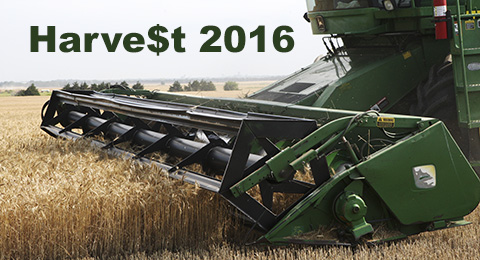
by James Jordan, Sumner Newscow — The Kansas wheat harvest is all but complete in Sumner County, as well as most of the state. Local agriculture officials say as of Friday it is about 95 percent complete in Sumner. Recent rains did not have much of an impact as most of the wheat in the county is already harvested.
But despite the good harvest, wheat prices are low – ranging from $3.60 to $4.40 a bushel.
Curt Guinn, of the Wellington Coop, said the operation has slowed a lot, and the elevator has surpassed 3 million bushels at that coop alone.
Statewide officials expect 393 million bushes to be harvested, which is a 22 percent increase from 2015. The statewide average so far is 48 bushels per acre, and if that holds up, it will surpass a record set in 2003.
The last two years were pretty lean, so this year is a welcome sight. Sumner County Extension Agent Randy Hein said he has heard of yields of 35 bushes an acre, up to as many as 70 in isolated areas. With the freeze, flooding and drought of a year ago, very few reached even thee 35 bushes an acre mark.
What problems there were, were minor, Hein said.
“From what I have seen and heard, it looks really good,” he said.
The entire state is doing well this year, with timely rains and a good mix of hot and cooler temperatures at the right time. Even in the western part of the state, good yields have been reported, with 30-40 bushels per acre common.
In the north central part of the state there are higher yields often, and many are reporting 70-80 bushels an acre.
The long cool spring helped a lot with filling out the heads of rain.
Test weights are around 62-63 in Wellington, which is good.
Some are holding off, hoping for better prices, and are storing it at the co-ops, Guinn said.
Sumner County has led the state in wheat production many years. It’s too early to tell this year, but it could easily become the No. 1 county again. In 2012, the last year official stats are available, it led the state during somewhat of a down year with 12 million bushels.


